| Jerusalem 101 - an introduction to the city of Jerusalem | ||
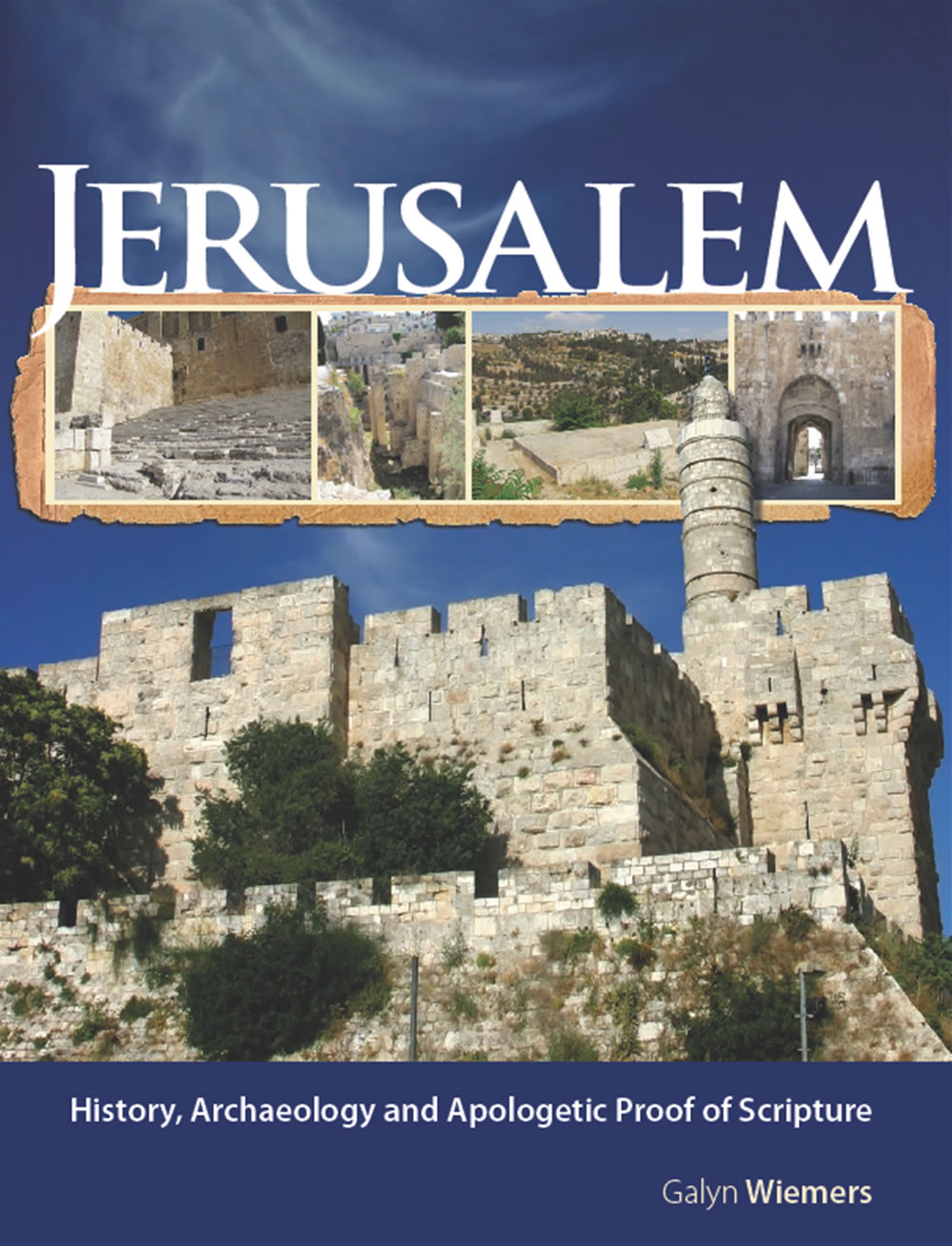
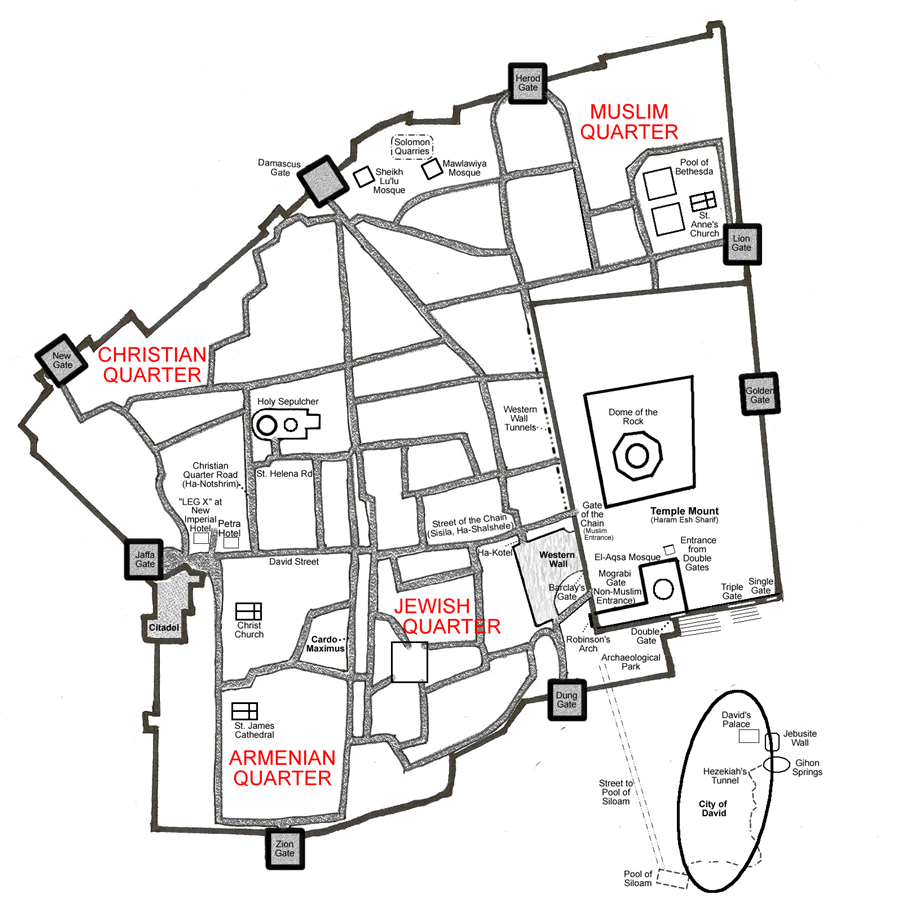
Jerusalem 101 is an introduction to the city of Jerusalem. This information is available in a 250 page book by Galyn Wiemers called "Jerusalem: History, Archaeology and Apologetic Proof of Scripture." This book is available upon request by sending a shipping address to gw@generationword.com. The entire book is available online as a .pdf here. The layout of the the modern city and the ancient city will be studied. The important sites will be highlighted and photographed. In addition, archaeological discoveries both old and new will be included in this introduction. Click on the lessons above to learn more about a location of Jerusalem. |
||
 |
||
Jerusalem is mentioned in Egyptian documents as Rushalimum in 1900 BC around the time of Abraham. In the 1300’s Jerusalem is called Urusalim in the el-Armarna letters. In the Assyrian documents of Sennacherib from the 600’s BC it is called Uruslimmu. The Hebrews called it Yerushalem. The name Jerusalem is a compound word from “yrw” and “slm” which would mean “Foundation of Shalem”. Shalem was one of the “beautiful and gracious gods” of Ugaritic mythology. The ancient word “yrw” appears in Job 38:6 as “cornerstone”, “bases” or “foundation”. The very ancient word “Shalem” is the Canaanite name of this city Jerusalem in Abraham’s day when it says in Genesis 14:18: “Melchizedek king of Salem brought out bread and wine. He was priest of God Most High.” Before David took the city it was occupied by the Jebusites and Jerusalem was called Jebus at that time. (Information from The New Encyclopedia of Archaeological excavations in the Holy Land, Ephraim Stern, Editor, The Israel Exploration Society and Carta, Jerusalem, Simon and Schuster, 1993, Vol. 2, page 698) |
||
|
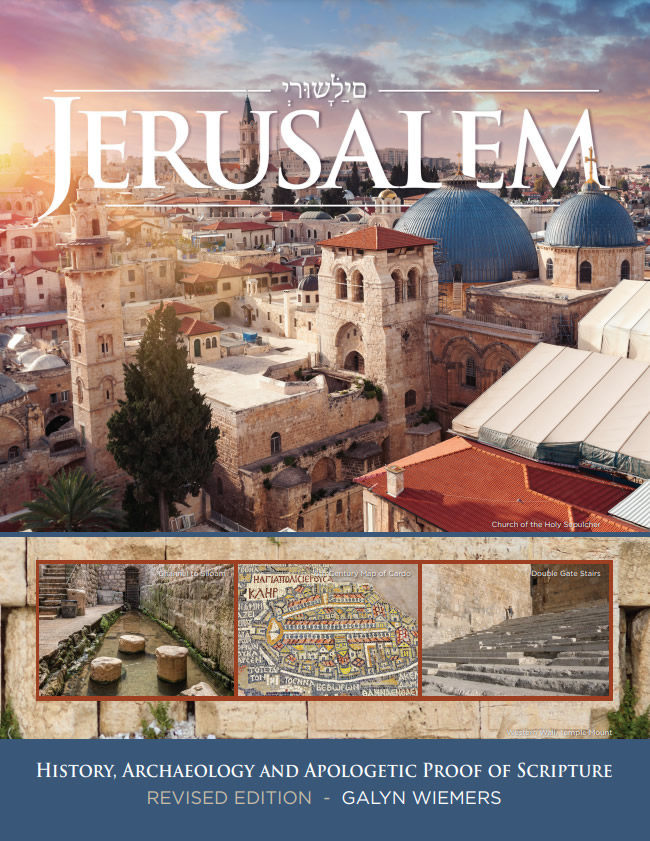 |
UPDATED! 2022 - Open this link |
|
2010 - Download a FREE online .pdf of "Jerusalem" HERE (click on the book cover to download .pdf of book) |
|
|
|
|