| |
|
In the Bible:
Act 8:40; 21:8-9, Philip preached here, settled here and raised four daughters here.
Acts 10, Peter came here to preach in Cornelius’ house;
Acts 12:19-24, God strikes Herod Agrippa I here;
Acts 9:30; 18:22; 21:8-16, Paul visits Caesarea three times;
Acts 23:23-27:2, Paul in prison for 2 years in Caesarea. |
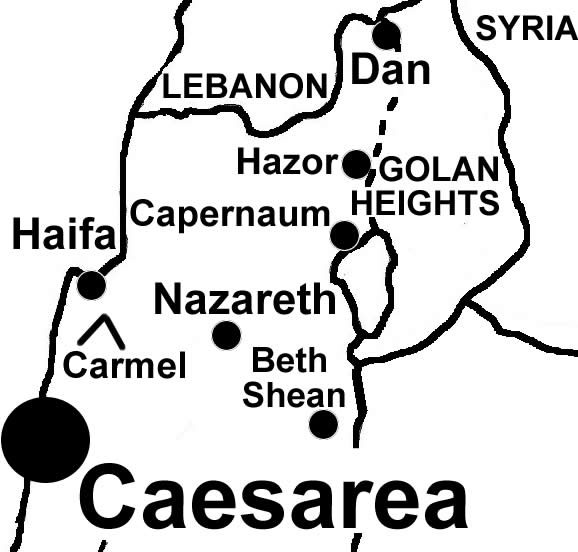 |
A Phoenician Port called Strato’s Tower before 22 BC when Herod the Great renovated it and called it Caesarea. Caesarea served as the governmental seat for Rome for 500 years. Roman procurators made Caesarea their home. Herod created the first man made port by building underwater walls with cemented blocks filled with masses of rubble.
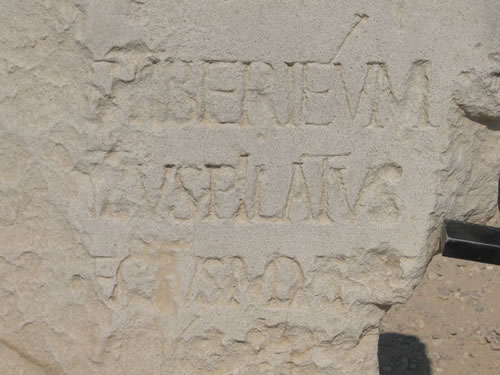
This harbor was called Sebastos (Greek for augustus or great). A massive lighthouse sat on the corner of the harbor walls that was modeled after one of the Seven Wonders of the Ancient World in Alexandria. The city was a typical Roman city with grid street layout, efficient sewer system, public buildings and public entertainment, a grandiose palace in the sea. Pontius Pilate’s name was found on an inscription here saying he was “perfect of Judah.” Herod the Great built the theater and aqueduct
The walls and gates built by the Crusaders can be seen today in the harbor. |
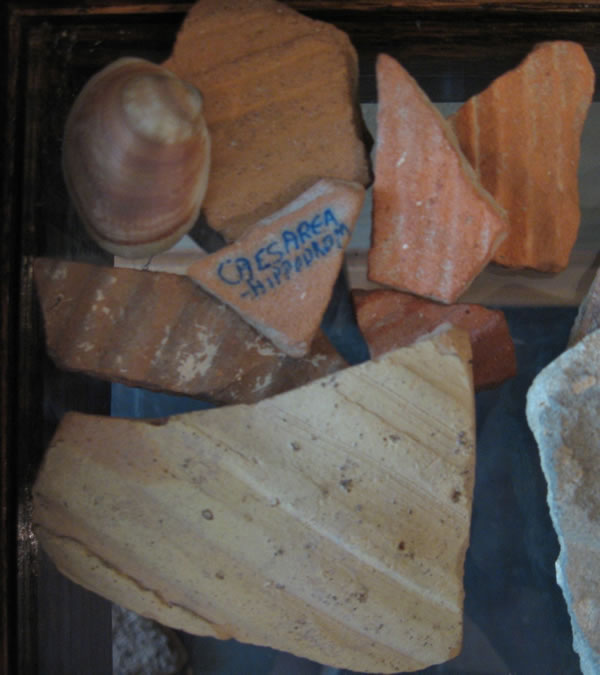
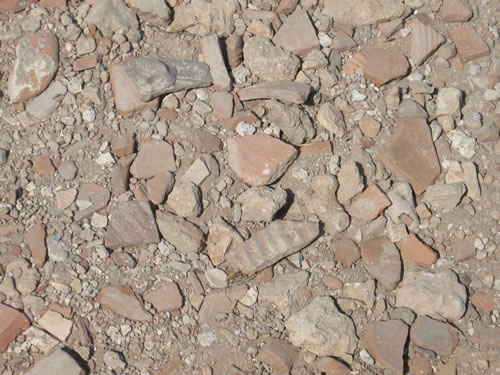
Potsherds picked up above the shrine in the east wall at the Hippodrome.
|
|
| |
|
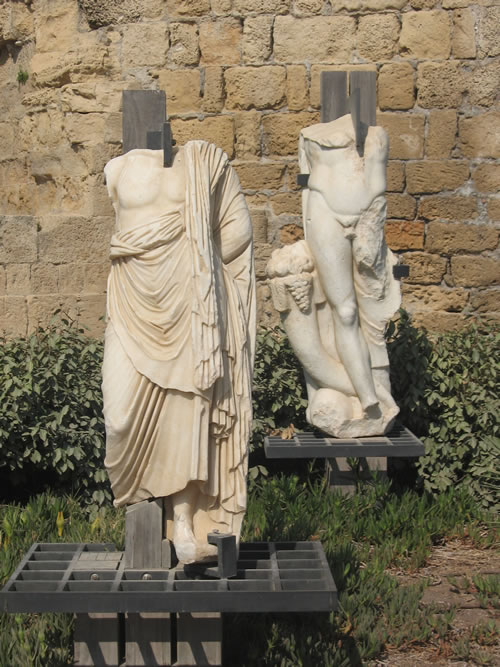
| Roman statues outside from Caesarea |
|
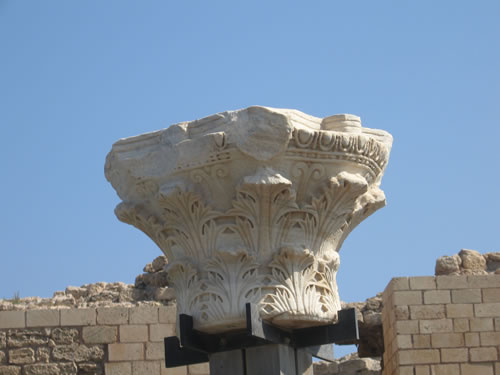
| Capital of a column in Caesarea |
|
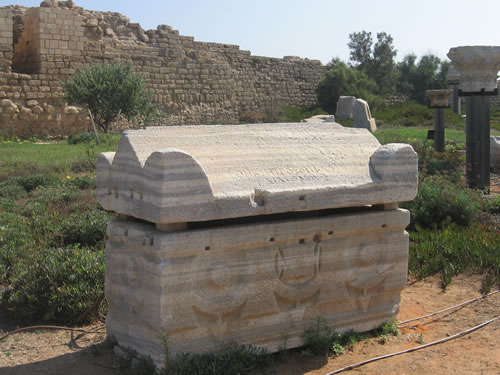
| A sarcophagus with Greek inscription on the front of the top |
|
Here is proof that Pilate did live and did have the title the Bible gives him. The lines in Latin read:
"Tiberium. . .
Pontius Pilate,
Prefect of Judea. . ."
This was originally a dedication of something Pilate had built in Caesarea to honor the emperor Tiberius.
It was discovered having been reused to built the temple.
More HERE |
|
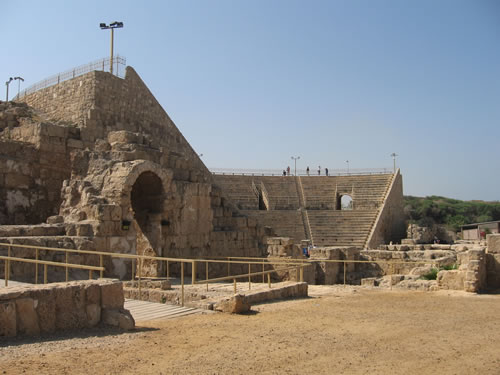
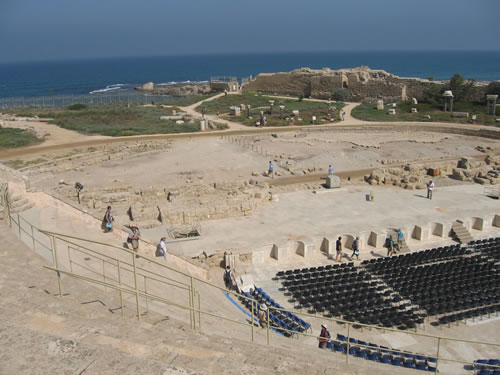
| Looking at the theatre. The arch in the forefront on the left is an entrance to the seating. |
|
A view of the stage from the seats in the theatre.
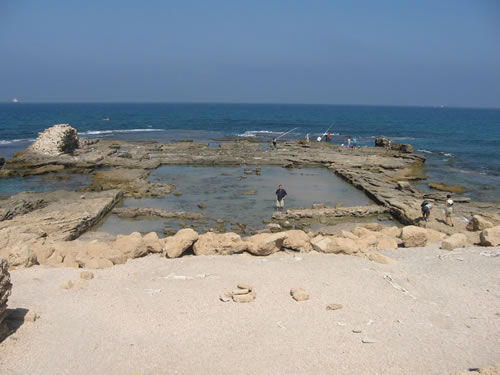
The remains of one of Herod the Great's palaces can be seen in the Mediterranean Sea. |
|
This square area cut out of the stone was the fresh water swimming pool in Herod the Great's Palace here in Caesarea. Herod Agrippa would have stayed here.
|
|
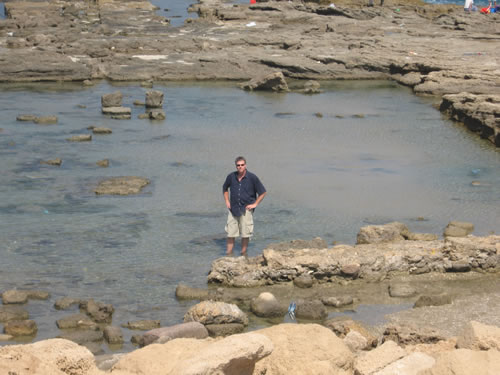
| Galyn standing in the salty sea water of the Mediterranean where Herod used to have fresh water pumped to fill this swimming pool in his palace. |
|
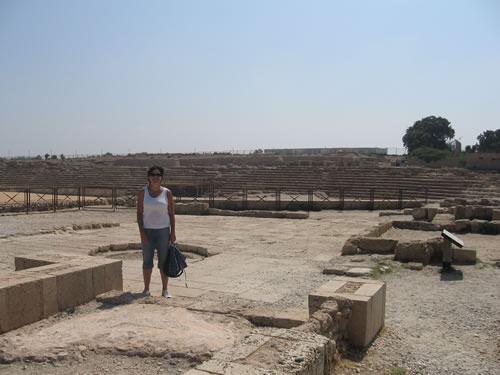
Beside the palace is the judgment hall. This is were Paul would have appeared before Festus, Felix and Agrippa.
The mosaic from the decorative floor infront of Toni is in the picture below. |
|
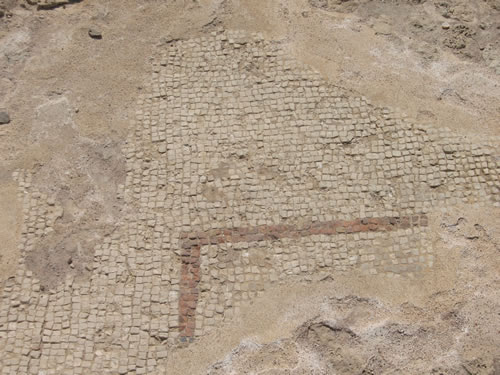
Mosaic from the floor of the judgment hall in Caesarea next to Herod's palace.
Paul would have walked and stood in this room. |
|
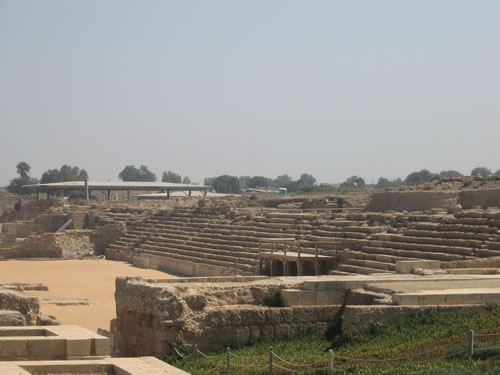
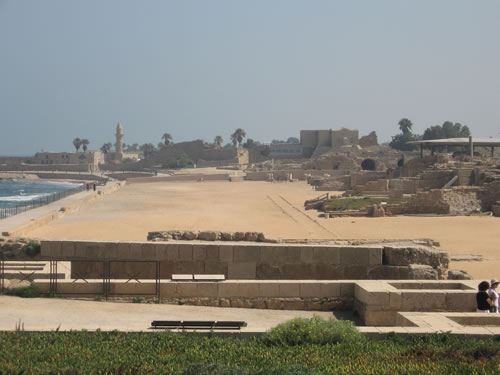
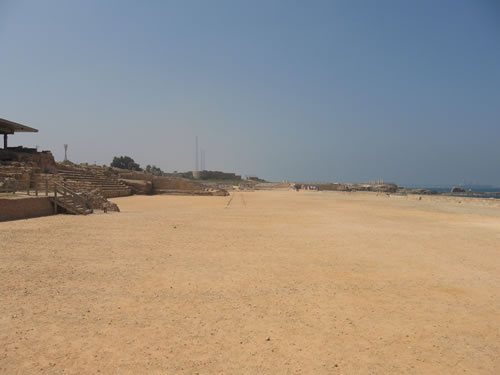
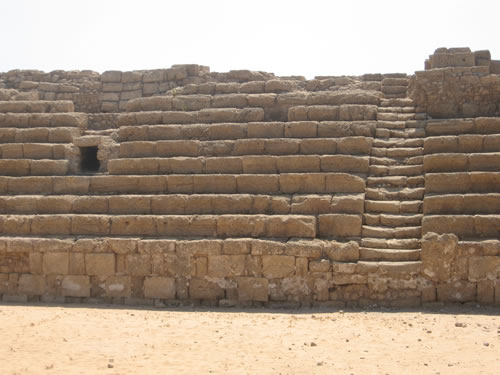
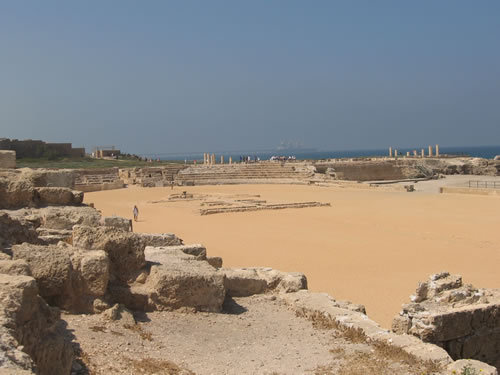
The Hippodrome.
The seating is to the right and the race track is to the left.
The structure by the green grass were the governor's seats for the games at the Hippodrome. |
|
These were the seats for the governor. A view of the race track at the Hippodrome.
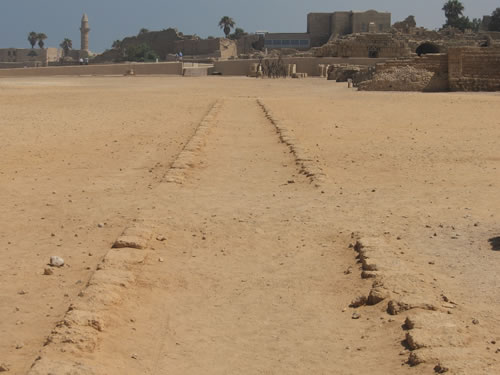
The parallel lines in the sand is the center of the track. The structure in the middle with the grass that extends onto the track was not part of the Hippodrome. It was built during the Byzantine and Crusader times |
|
| The center of the Hippodrome track |
|
| A view of the length of the track used for horse, chariot and human races. This was a 300 yard straight run or about a 600 meter oval track. Tracks today are 400 meters. |
|
Hippodrome seating held 5,000 people. The higher seating is gone.
The Hippodrome was built by Herod the Great before the time of Christ. Herod then began what became known as the Caesarea Games. |
|
| This is the view from the shrine in the east wall of the Hippodrome |
|
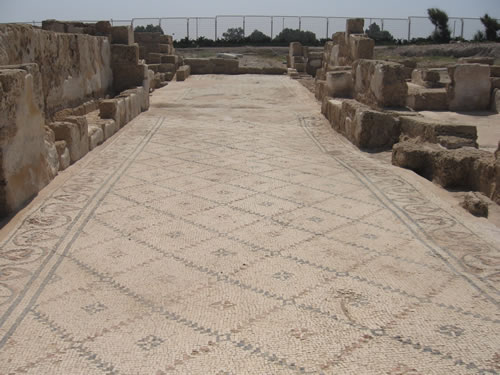
| This is a mosaic covered walk way that led to the shrine in the Hippodrome. |
|
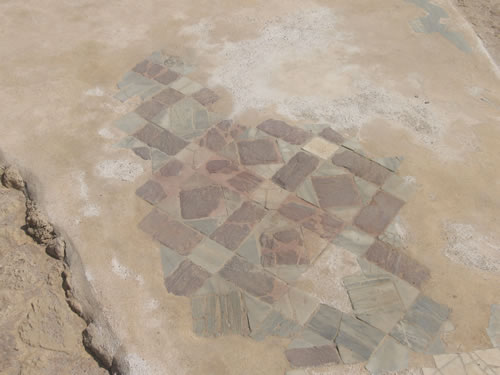
| This is mosaic rock work on the floor near the shrine. |
|
| Potsherds on the floor of the shrine. |
|
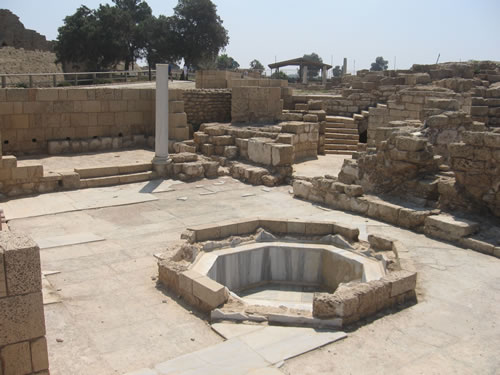
| A bath. |
|
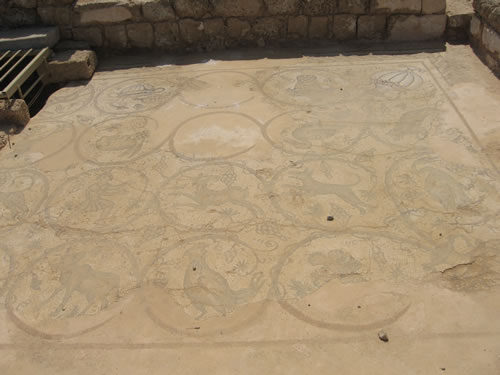
| Mosaic floor near the baths. These are Greek/Roman mosaic because Jewish mosaics never include images of animals or men. |
|
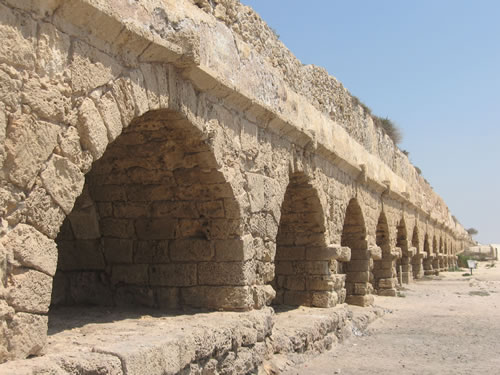
| An aqueduct leading into the city of Caesarea |
|
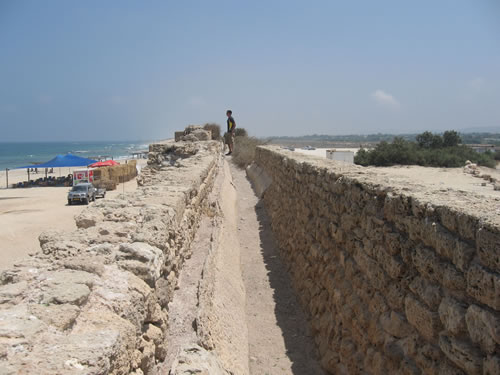
| The water flowed in the "U" shaped channel at the top of the aqueduct |
|
| Here is a view of the aqueduct as I stand in the top |
|
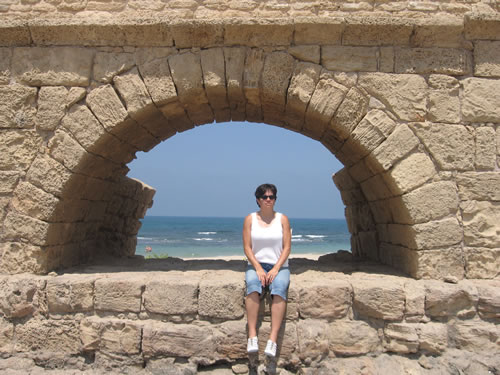
| Toni seated on the aqueduct with the Mediterranean Sea in the background. |
|
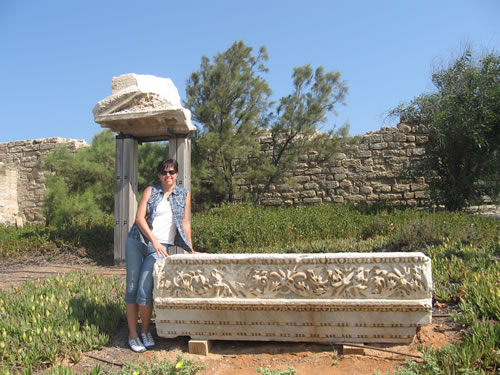
| Toni stands by a carved lintel stone from Caesarea. |
|
| |
|
| |
|
| |
|
| |
|