Matthew 16:13;
Mark 8:27,
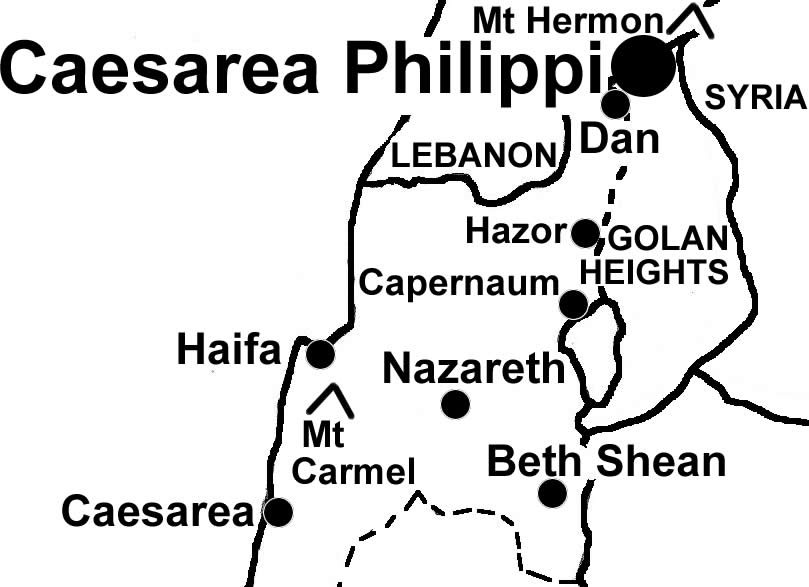
the furthest Jesus traveled north was here.
Peter confessed Jesus was the Son of God.
Transfiguration occurred up on Mount Hermon at this time.
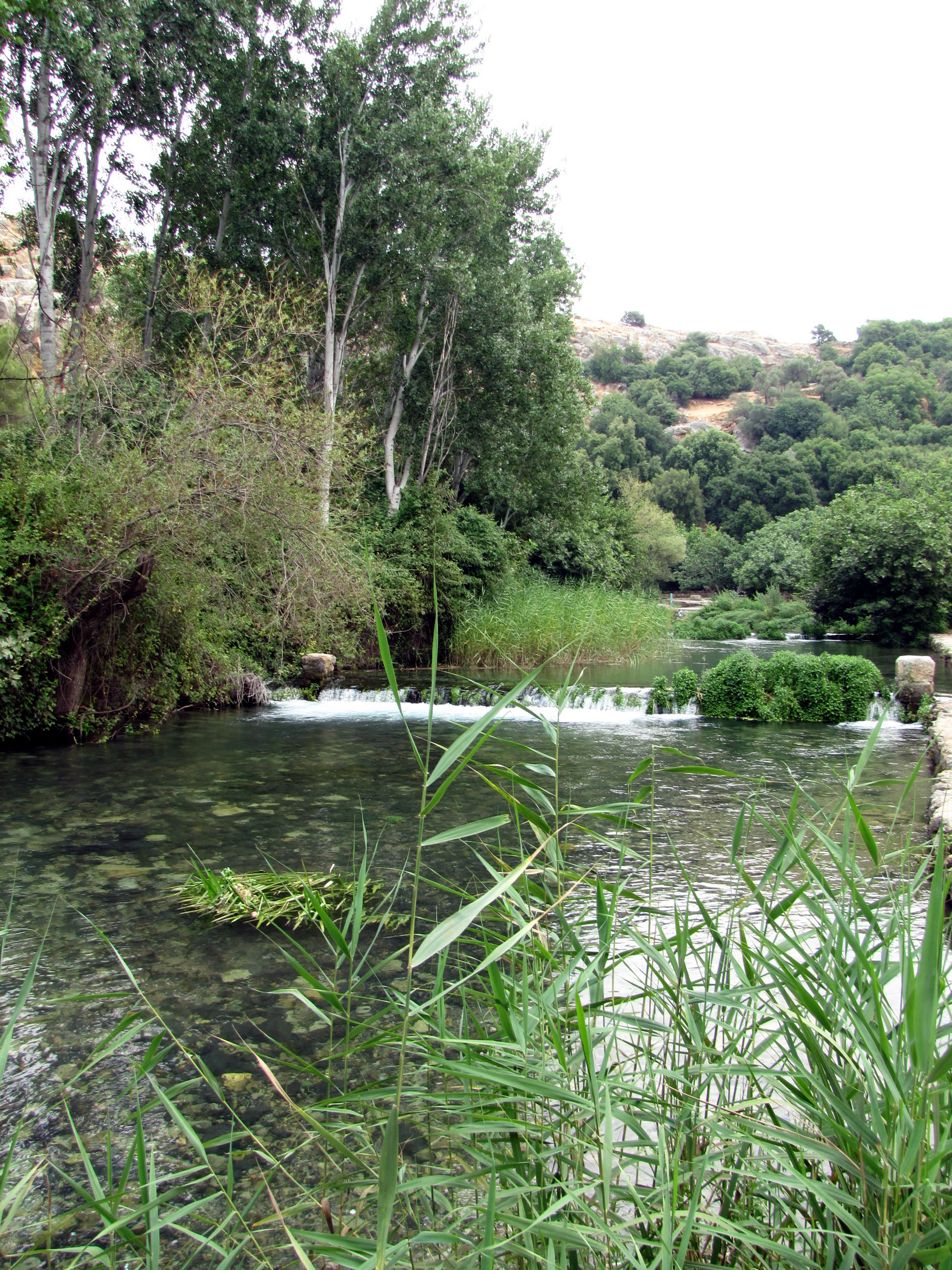
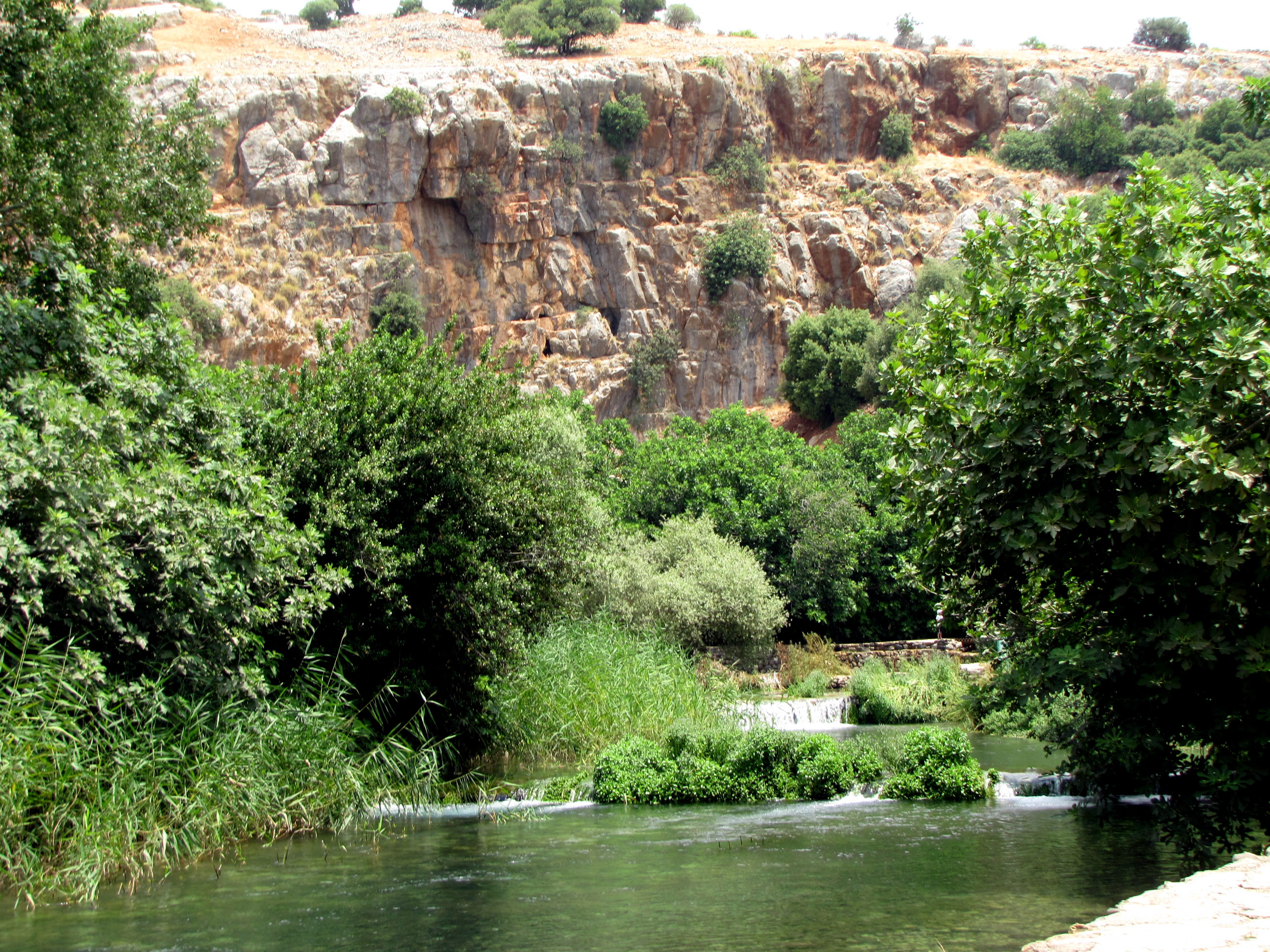
Worship site for Pan, so called Panias before Herod Philip rebuilt it in 2 BC and renamed it Caesarea. It became known as Philip’s Caesarea to distinguish it from his father’s Caesarea on the sea. 25 miles north of the Seas of Galilee, and 50 miles SW of Damascus, it sets at the base of Mt. Hermon where it serves as one of five headwaters of the Jordan River producing 5,000 gal./sec in winter.
Antiochus III the Great defeated Egypt at Panias in 197 BC. The Syrians then took control of the area and Antiochus Epiphanes used it to move into control of Judea which resulted in the Maccabean Revolt.
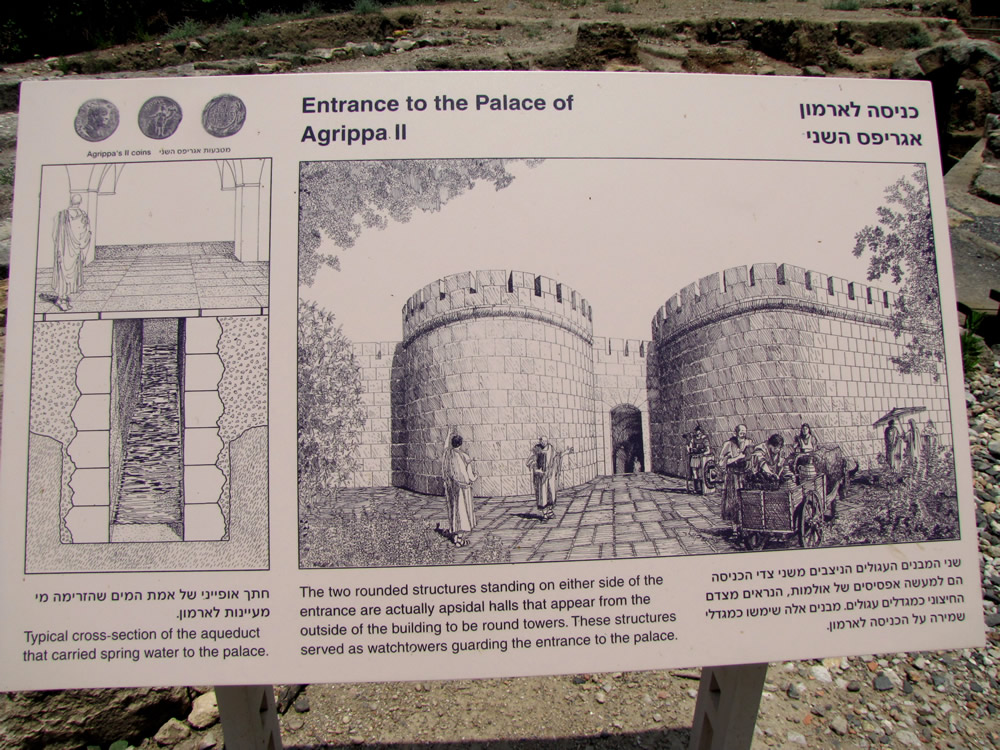
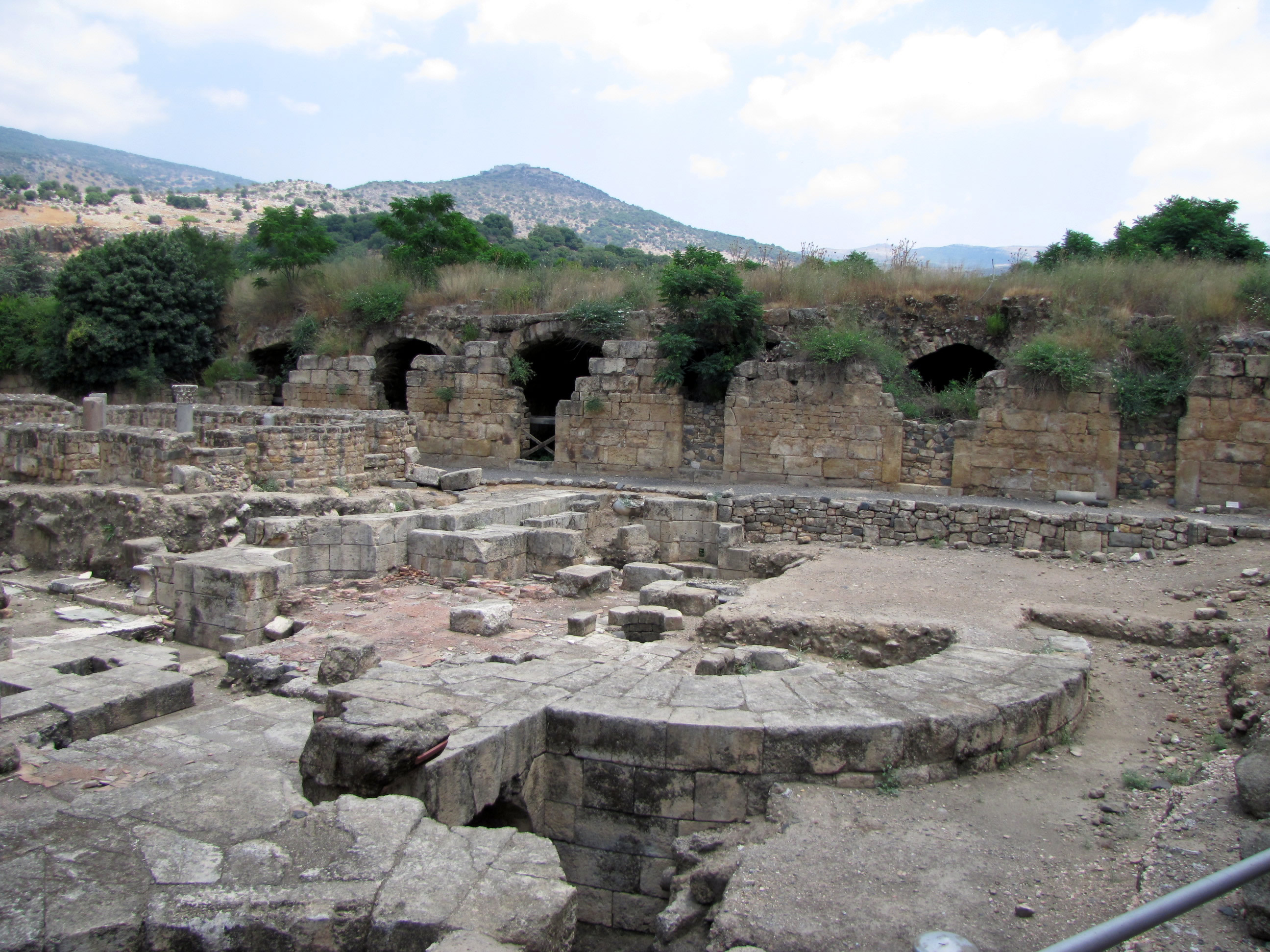
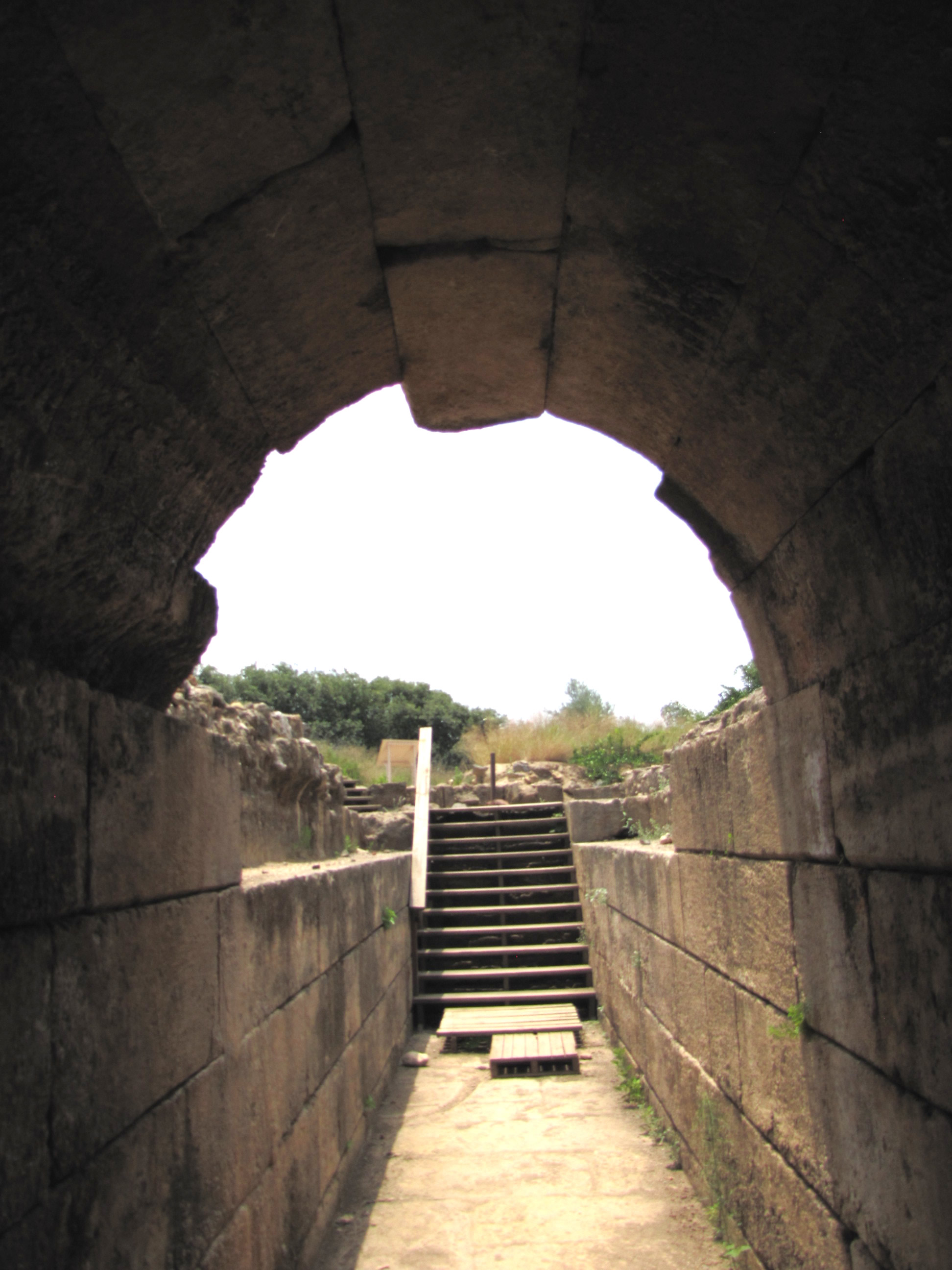
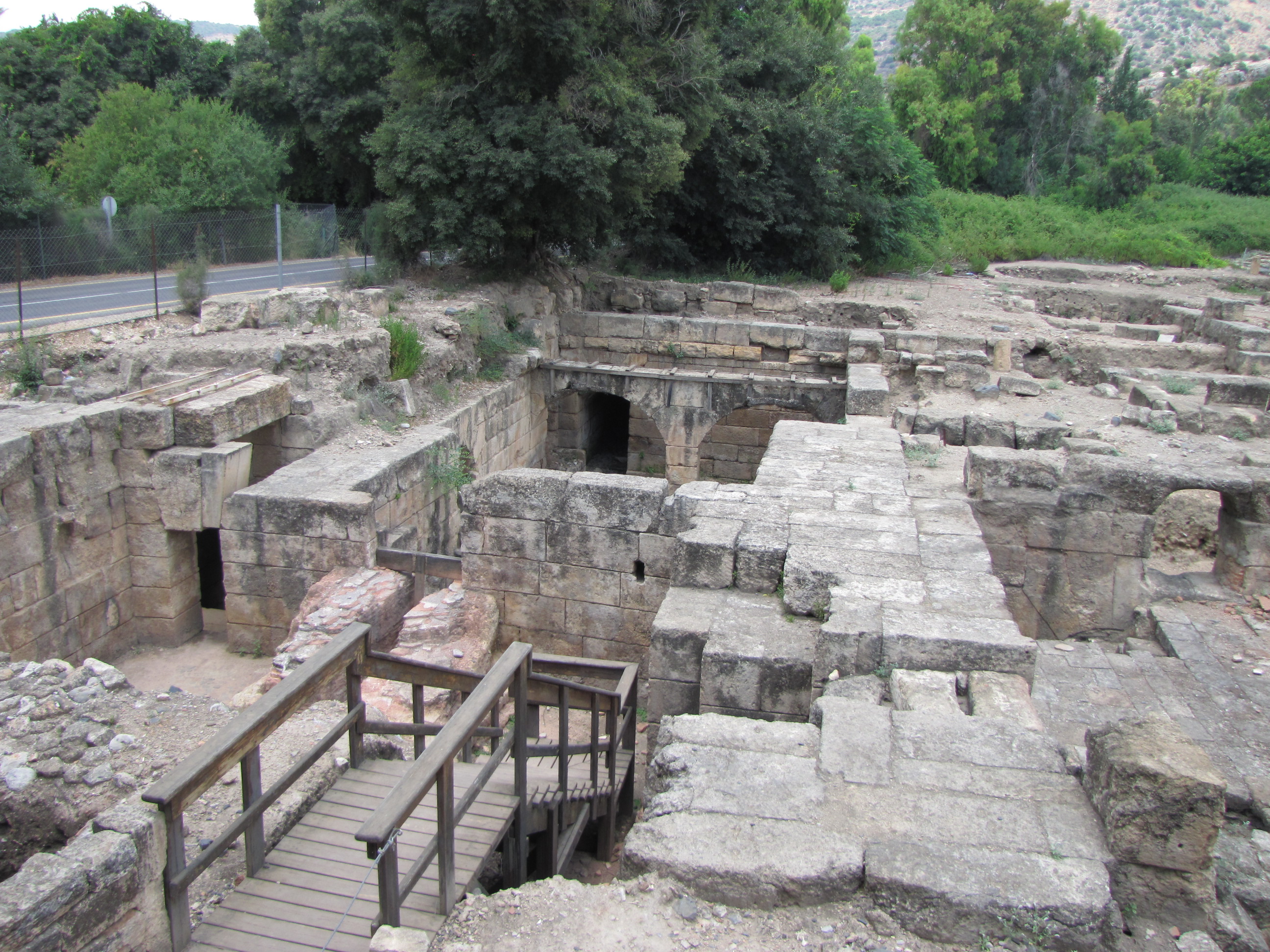
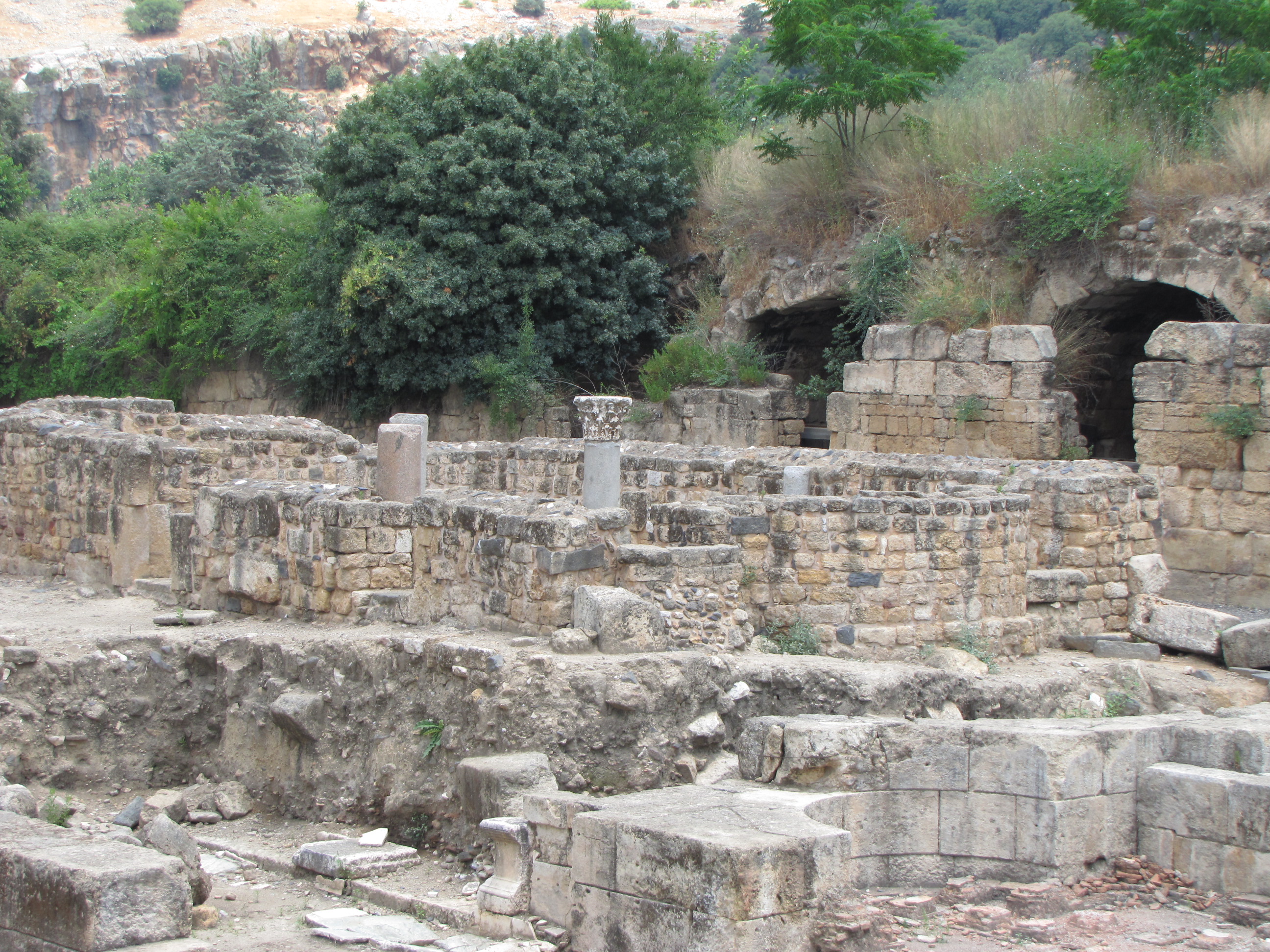
Herod the Great had built a temple to Caesar near this spring in the Golan Heights and Philip his son made it the capital of his kingdom in 2 BC after his father died. Philip built a palace there that became a luxurious palace for Agrippa II. With the rise of Christianity in the Byzantine period pagan worship of Pan ended and the temples were abandoned, but the city continued to prosper and the royal palace became a public bath house.
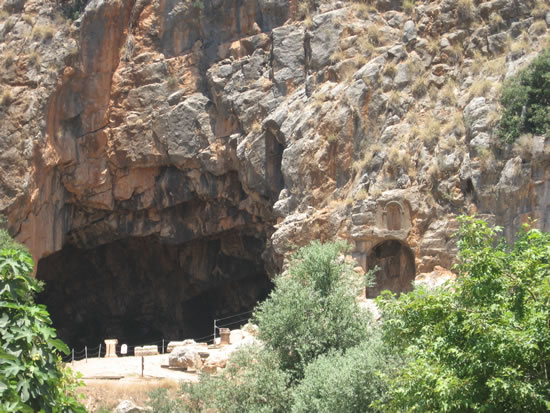
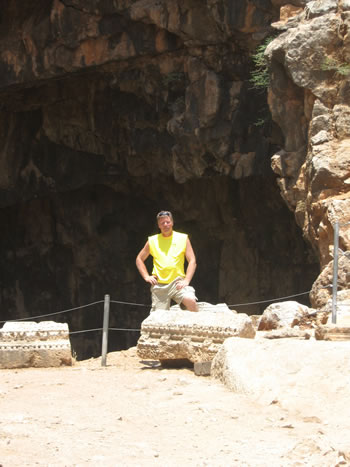
In Jesus' time a temple stood in front of this cave. In the cave or the grotto was a very deep pool that they
never could measure (according to Josephus) and a powerful stream of water flowed. The cave
was believed to be the gates to Hades. Several other shrines and temples stood here including this one to
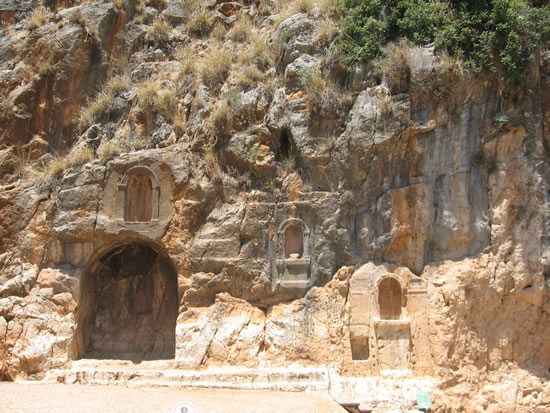
Caesar. The niches in the wall held images of the gods Pan, Echo and Hermes.
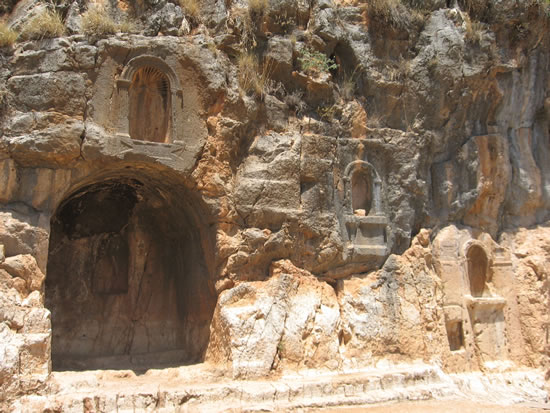
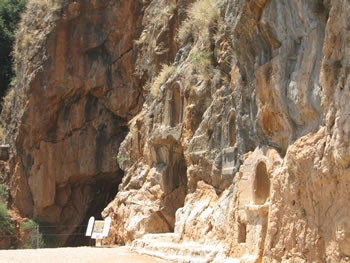
Here are the five niches in the rock formation. Jesus stood here in Matthew 16:13 and said he would
build his church on "this rock" and the Gates of Hades would not overcome it.
A sign at this site reads:
”THE GROTTO OF THE GOD PAN: This cave is the nucleus beside which the sacred sanctuary was built. In this 'abode of the shepherd god,' pagan cult began as early as
the 3rd century BCE. The ritual sacrifices were cast into a natural abyss reaching the underground waters at the back of the cave. If the victims disappeared in the water this was
a sign that the god had accepted the offering. If, however, signs of blood appeared in the nearby springs the sacrifice had been rejected.”
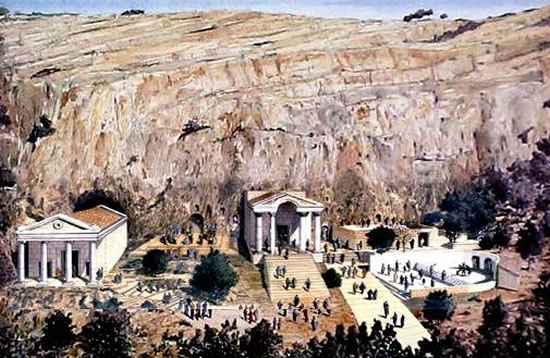
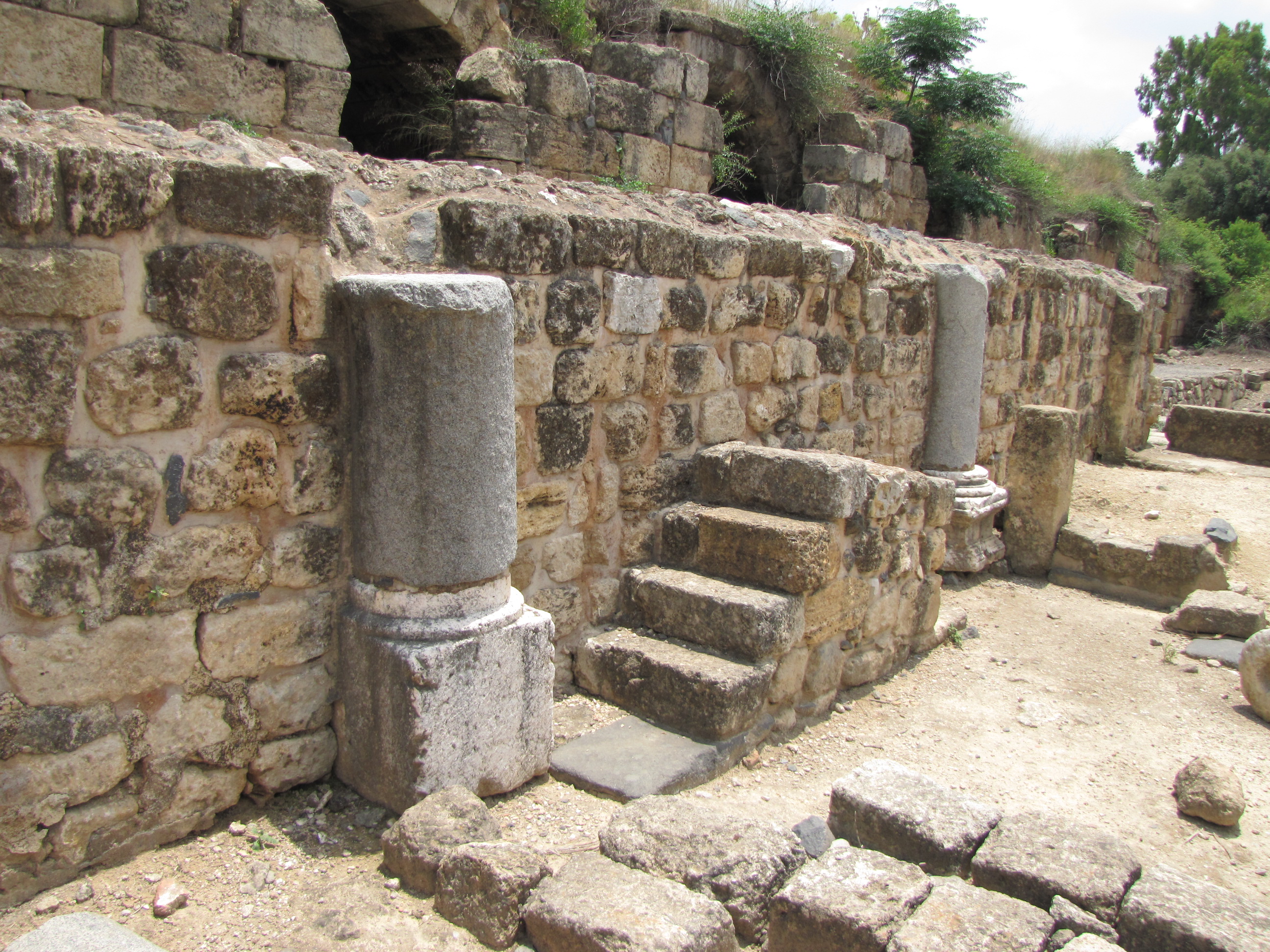
Several temples stood infront of the rock formation.
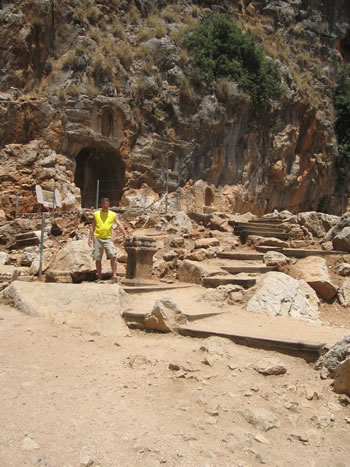
In front of the five niches was a platform shrine with a temple to the left (or, this side) and a temple to the right.
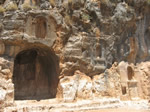
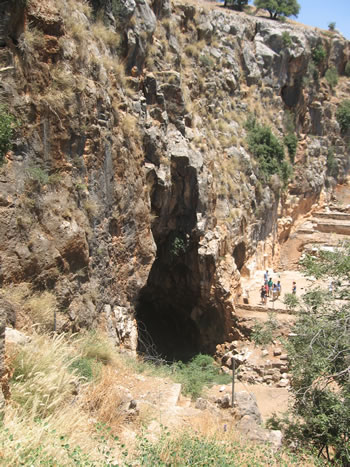
This is the enterance to the cave or the grotto at the back of the temple. This was the seemingly bottomless pit to the underworld filled with water and where a powerful stream of water flowed to feed the Sea of Galilee and ultimately the Jordan River and the Dead Sea. Notice the remains of the temple can be seen here.
The cave to the left. The five niches to the right.
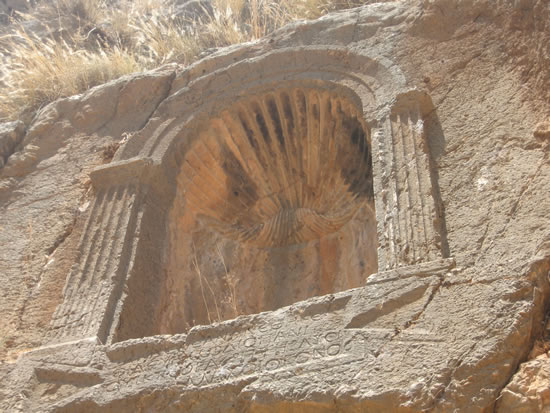
The five niches. One is large (an artifical cave carved by worshippers). Three are similar sizes. One is smaller and to the bottom left of the third medium size niche.
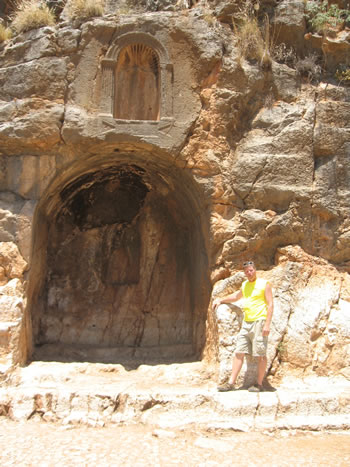
The first two niches. The large one is seen here. The second niche on the top has a Greek inscription with some nice decorative carving around it.
Here the carving on the roof of the second niche can be seen. Notice the fluted pillars that are carved into this rock formation and the molding cut for the top. The Greek inscription is on the bottom.
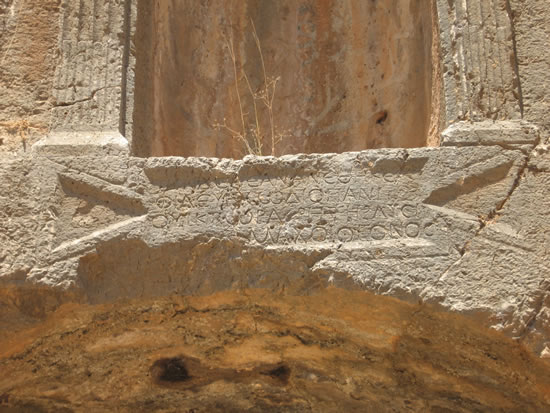
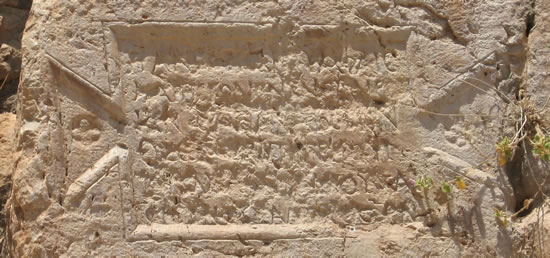
Here is a close up of the Greek inscription for the second niche.
The Greek inscription reads:
"The priest Victor, son of Lysimachos, dedicated this goddess to the god Pan (Diopan), lover of Echo."
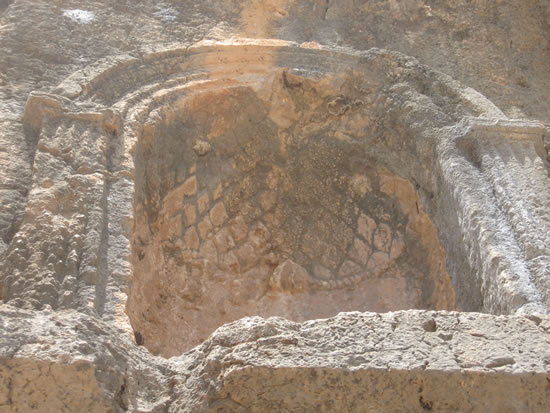
Here is the roof and carving of the third niche.
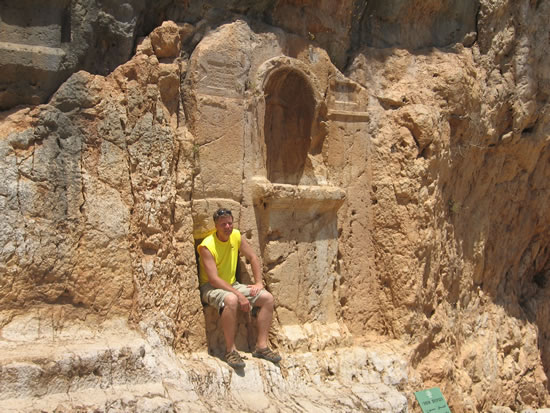
Here is the fourth and fifth niches. Galyn is seated in the smaller niche where 2,000 years ago a image of an god like Pan or Echo would have stood. About three and half feet above Galyn is another Greek inscription. (Its translation is below.) The other inscription to the right of the higher, larger niche says in Latin "Pane/z (....)"
The Greek inscription above the fourth niche and beside the fifth niche. This mutilated inscriptioin reads:
"For Pan and the nymphs, Victor son of Lysimachos with his children dedicated a likeness in stone of Hermes, child of Maia, son of Zeus, having vowed it, the year 150
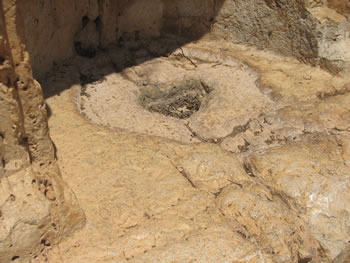
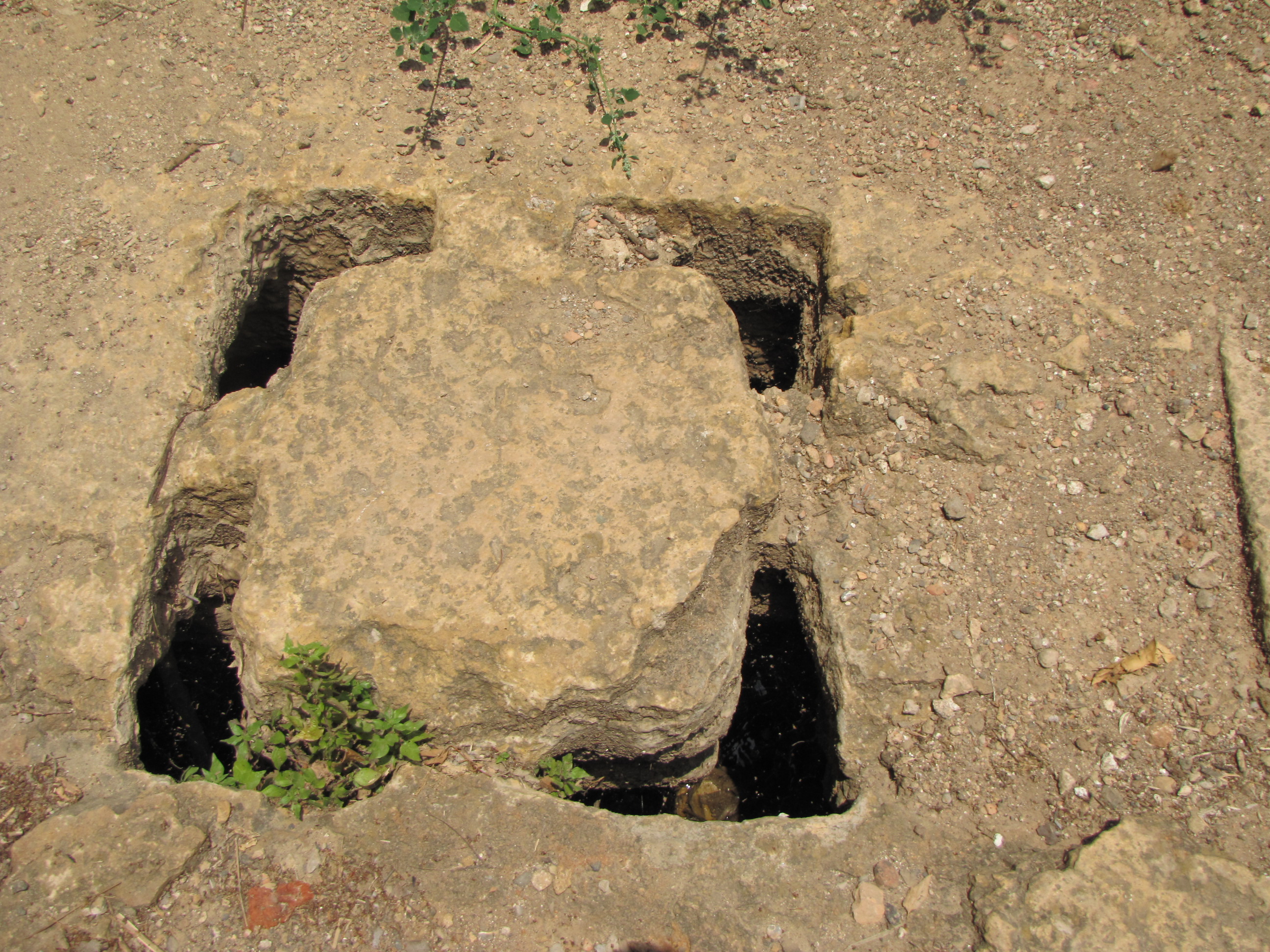
The is the place the idol would have sat in the fifth niche. Notice the carved hole used to help secure the image of the god so it did not topple over during a worship service or a storm.
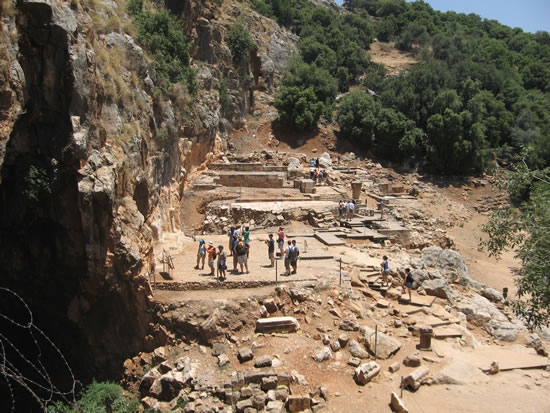
A view from a hill to the right. Notice the people standing on the platform of the former shrine in front of the niches.
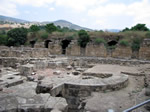
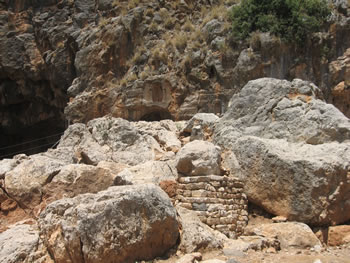
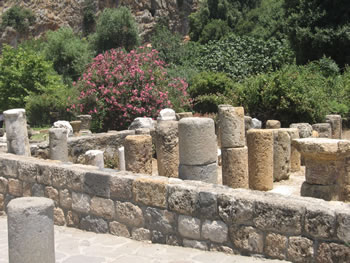
The temple ruins in front of the niches in the large rock formation.
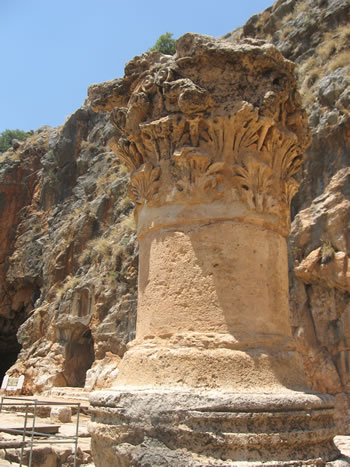
Pillars from the temples including some from the temple to honor Caesar.
A close up of the decorative carving in the stone.
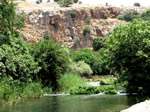
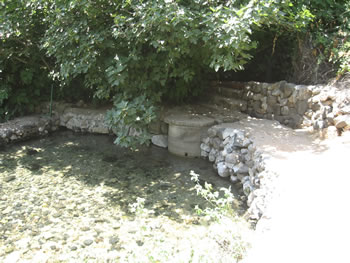
Today water still flows from the same spring as it did 2000 years ago, but an earthquake has shifted the plates and the water does not leave the spring through the cave anymore.
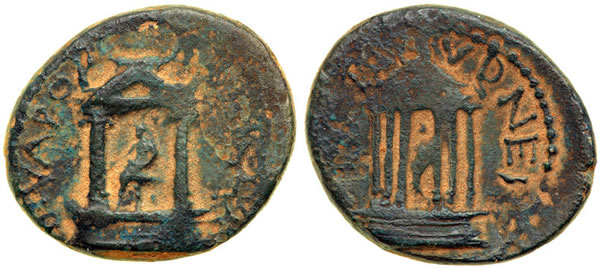
Coins from Caesarea Philippi showing one of the temples. This photo was taken from a coin collectors sale page.
Herod Agrippa II, 56-95 C.E. minted at Paneas under Nero, c. 65 C.E. Distyle temple on podium; within, female figure (Poppaea?) seated left, holding cornucopiae. Reverse: Round hexastyle temple; within, female figure standing left, holding cornucopiae. Highlighted; Very Fine. Again, as per NLJ, better thought of as a city coin that honors the memory of Nero's second wife Poppaea and their daughter, Claudia. Estimated Value $325-475. Photo from website: CoinArchive.com
The temples can be seen here. The one on the left stands infront of the cave. The platform in the middle stands infront of the niches. Temple drawing came from a display at the sight.
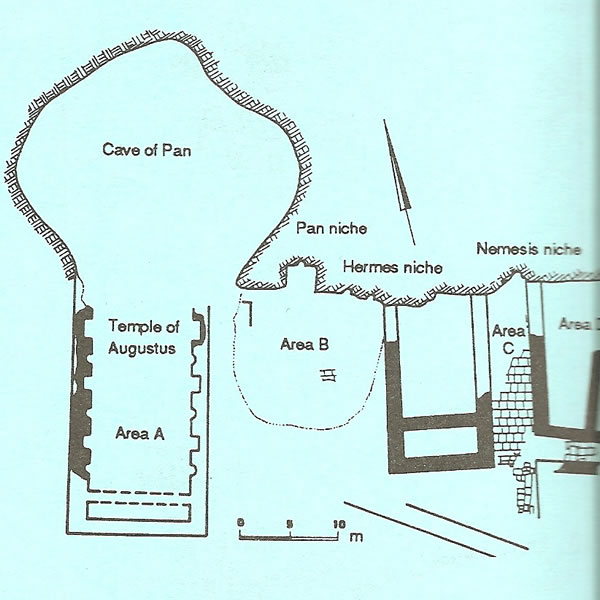
Sacrifices were thrown out the back of the Temple of Augustus into the immeasurable water in the Cave of Pan. If the sacrifices disappeared they were accepted.
This was not a typical place to take young Jewish men.
Read a Blog about this subject in the saved text here
Josephus writes in "Antquities of the Jews" 15.10.3
"So when he had conducted Caesar to the sea, and was returned home, he built him a most beautiful temple, of the whitest stone in Zenodorus's country, near the place called Panium (Panias, Caesarea Philippi). This is a very fine cave in a mountain, under which there is a great cavity in the earth, and the cavern is abrupt, and prodigiously deep, and full of a still water; over it hangs a vast mountain; and under the caverns arise the springs of the river Jordan. Herod adorned this place, which was already a very remarkable one, still further by the erection of this temple, which he dedicated to Caesar."
Josephus writes in "Wars of the Jews" 1.21.3
"And when Caesar had further bestowed upon him another additional country, he built there also a temple of white marble, hard by the fountains of Jordan: the place is called Panium (Panias, Caesarea Philippi), where is a top of a mountain that is raised to an immense height, and at its side, beneath, or at its bottom, a dark cave opens itself; within which there is a horrible precipice, that decends abruptly to a vast depth: it contains a mighty quantity of water, which is immovable; and when anybody lets down anything to measure the depth of the earth beneath the water, no length of cord is sufficient to reach it. Now the fountains of Jordan rise at the roots of this cavity outwardly; and, as some think, this is the utmost origin of Jordan: but we shall speak of that matter more accurately inour following history."
Josephus writes in "Wars of the Jews" 2.9.1
"Both Herod and Philip continued in their tetrarchies; and the latter of them built the city Cesarea, at the fountains of Jordan, and in the region of Paneas."
Josephus writes in "Wars of the Jews" 3.9.7
"Vespasian . . . removed from that Cesarea which was by the se-side, and went to that which is called
Cesarea Philippi and there he refreshed his army for twenty days . . ."
Notes from "The New Encyclopedia of Archaeological Excavations in the Holy Land" (5 volumes) page 136-143, volume I, 1993, Ephraim Stern, Editor
"There is a midrash that alludes to the gate of a city wall or perhaps of a sanctuary that would fall with the arrival of the Messiah." (Read here)
"What Josephus described was corroborated by the discovery of such a chasm outside the entrance, in the excavated area (although the grotto (cave) has not been excavated yet). Here, the partial collapse of a Roman vaulted substructure revealed a chasm . . . the chasm reaches all the way to the underground water level. It is likely, therefore, that a similar hollow once existed inside the cave and formed a 'sacred well' to the Paneion. The Hellenistic arrangement of the grotto awaits the clearing of the cave floor, presently covered by the collapse of the cave's roof in the 1837 earthquake. Few Hellenistic remains were uncovered in the excavationoutside the cave, and it seems that in this period the cult place was confined to the natural cave." (NOTE: This means there is much more evidence buried in the remains. Ancient descriptions and archaeolgy indicate a passage way into the earth. The descriptions of a passage to the underworld may be confirmed by an inscription that says "Gates of Hades" to match Jesus' description of this place. Remember other examples such as Daniel's identification of Belshazzar or the Genesis use of the term "Hittites" were once only know from biblical literature.)
"The facade wall (front wall) of the temple has not yet been located. However, coins of Phililpus (see coin above or diagram above) depicting the Augusteum show that it stood on a high podium and had four Ionic columns carrying an unbroken pediment. Three sculptured geison blocks . . . were found at the entrance to the grotto, among the fallen rock debris. These may have framed a passage of sorts from the temple to the grotto. It seems that the temple did not have a regular back wall; its adyton (a restricted area within a temple usually a small area at the farthest end that housed an image; similar to the Most Holy Place in the Jewish temple) was the grotto (cave) itself."
Delu xe Edition of Halley's Bible Handbook (2000, 2007) page 550 in "The New Testament", "The Four Gospels", Matthew 16:13-20 - Peter's Confession" refers to this cave when it says: ". . . cave which the Romans believed to be the entrance into Hades."
For Bible teaching audio, video and study tools
visit Generation Word's home page at www.generationword.com