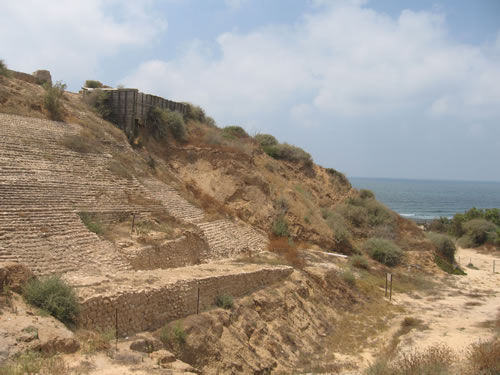
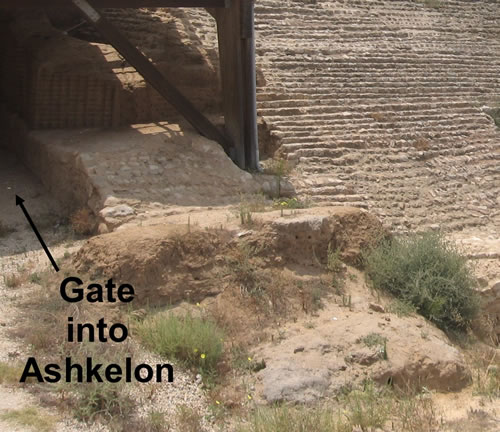
The Rampart that surrounded Ashkelon. This design is called a glacis and was covered with a very smooth, polished finish that made it impossible to climb by the enemy. A large wall would have stood at the top.
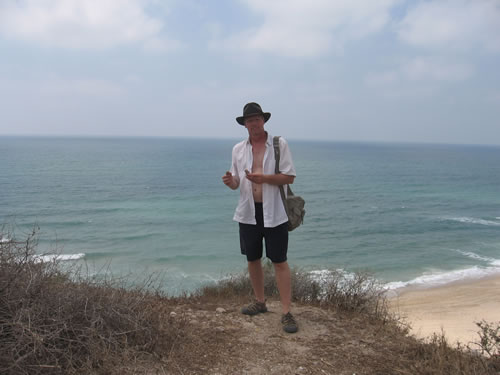
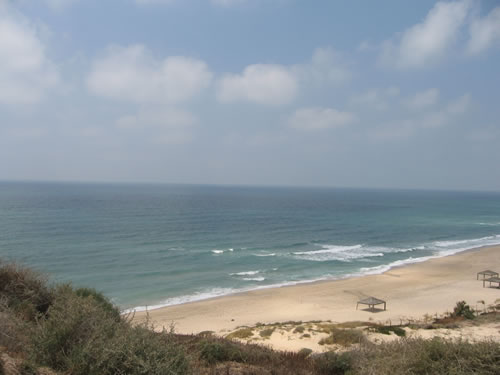
The Mediterranean Sea is in the background.
The city gate is just to the left of this photo.
In the Bible: Judges 1:18, Judah captured, but lost Ashkelon;
Judges 14:19, Samson killed 30 men from Ashkelon and took their clothes to pay a gambling debt;
1 Samuel 6:17, provided a gold rat and a gold hemorrhoid along with the other four cities;
2 Samuel 1:20 – David’s lyrics asked that Saul and Jonathan’s death not be announced in Ashkelon’s streets;
Amos 1:8, Ashkelon is rebuked by Amos for selling Israelites into slavery.
12 miles north of Gaza and 32 miles south of Joppa. One of the five leading Philistine cities mentioned in the Bible: Ashkelon, Ashdod, Ekron Gaza, Gath. Philistnes settled on the coastal plain 1200 BC. The name Ashkelon comes from the word “shekel” since Ashkelon was a major trading center located on the international highway (see back pages of this book). It was 150 acres, the largest of the Philistine’s cities and the only one built on the coast due to sand.
In the 1880’s Lady Hester Stanhope began excavation. Lawrence Stager with Harvard University began excavating Ashkelon in 1985. Civilizations beginning with the Neolithic Age (8300-4500 BC) have been uncovered.
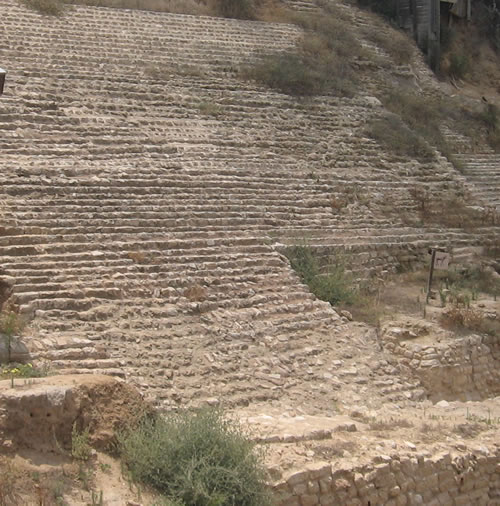
A close up of the glacis that covered the base of the wall. This is 3,500 to 4,000 years old.
Joshua and David would have faced the Philistines of this city.
Ashkelon was one of the five leading Philistine cities of the Old Testament. The others were: Gaza, Gath, Ekron, and Ashdod.
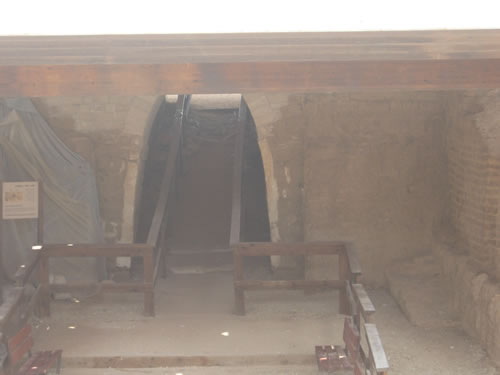
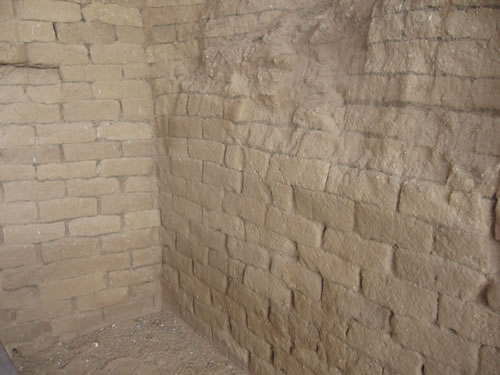
The gate of the city. The original mud bricks are dark. The reconstruction is the lighter bricks.
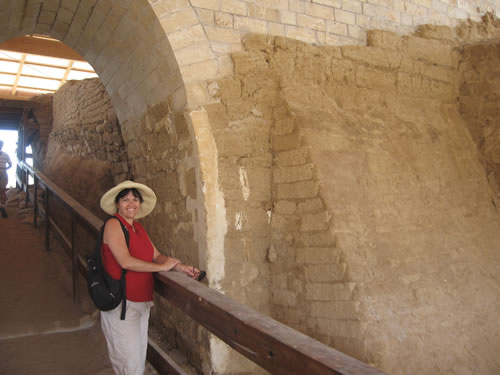
Toni stands by the Philistine gate of Ashkelon. Again, the dark mud bricks are from the days of the Philistines. The lighter colored are reconstruction to give us an idea of the original gate.
A diagram of the gate in Ashkelon
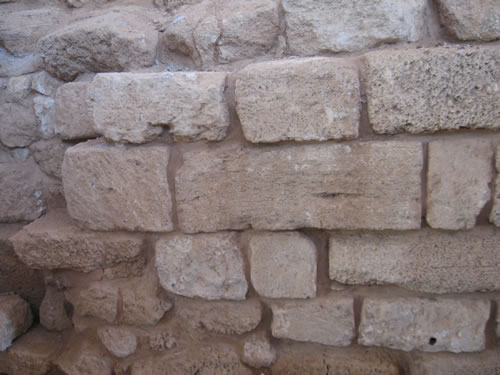
Bricks in the wall
Original mud bricks inside the city gate.
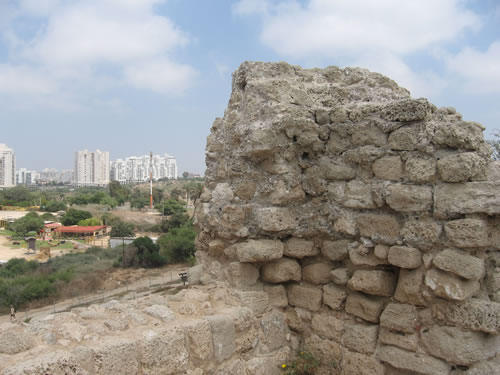
Looking over the remains of the wall of Ashkelon that sits on top of the rampart base.
This wall would have been much higher.
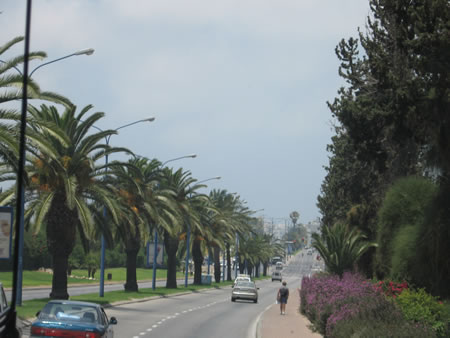
The modern city of Ashkelon is in the back ground.
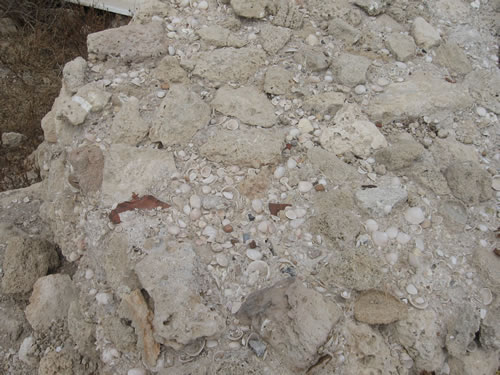
You can see the mortar mixed with shells that the Philistines used to build their walls.
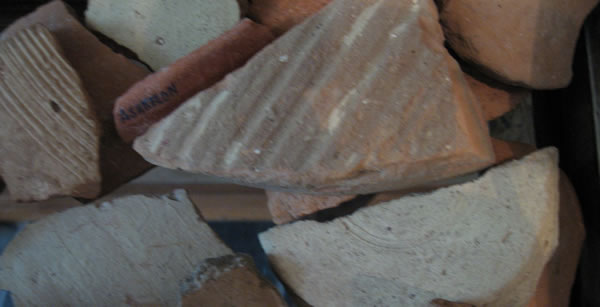
Galyn stands on the remains of Ashkelon with a couple of the potsherds he pick up among the ruins.
Ashkelon sits right on the shore of the Mediterranean Sea.